It is a supplement
Regulated as a food, not a medicine. No pre-market approval, no requirement to demonstrate efficacy before sale, and no legal claim to treat anything. The manufacturer carries responsibility for safety and labelling compliance.
Before the pricing tables and the trust badges, a simple question deserves a simple answer: what exactly is this, and who is it actually for? Here is the product described across a pharmacy counter rather than across a sales page.
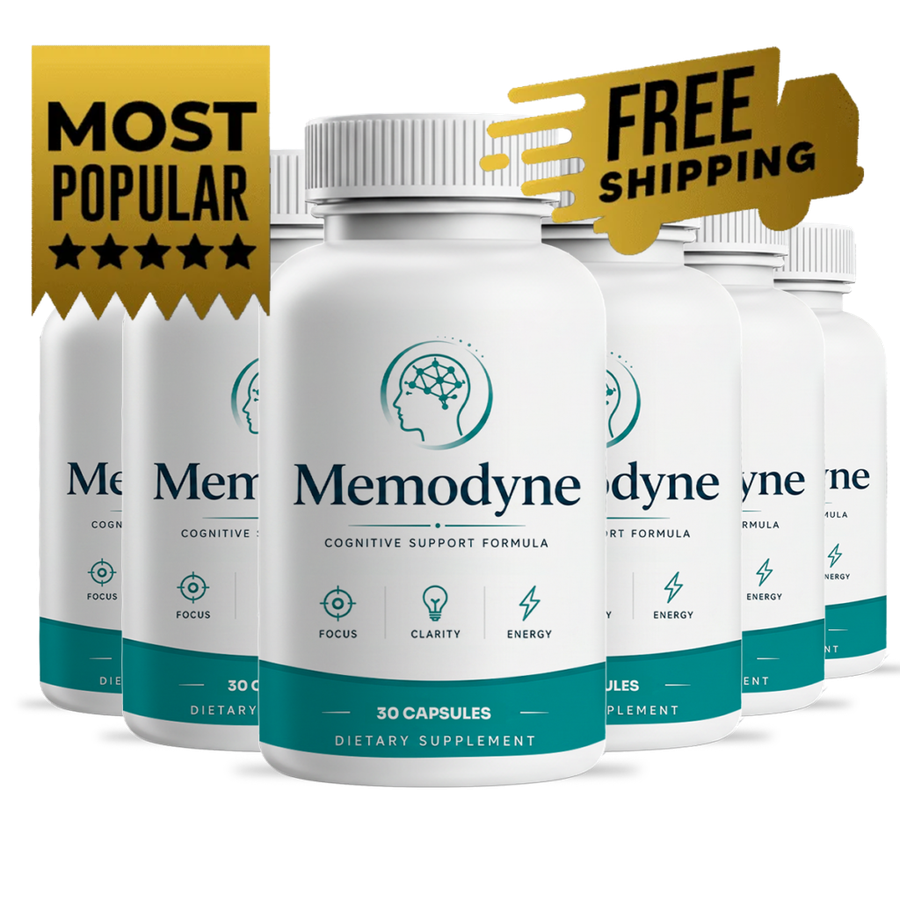
Memodyne is a capsule-form dietary supplement marketed to support memory, focus, mental clarity and general brain health in adults. The serving is one capsule daily, usually taken in the morning. Each bottle holds 30 capsules, making one bottle a 30-day supply. The formula contains six actives: Ginkgo Biloba Leaf, Bacopa Monnieri, Phosphatidylserine Complex, Huperzine-A, N-Acetyl L-Carnitine HCl and St. John’s Wort Extract. It is sold through the brand’s order page in packages of two, three or six bottles, with a 60-day money-back guarantee counted from purchase date.
Before anything else: this formula contains St. John’s Wort. That single ingredient changes the safety conversation completely. St. John’s Wort induces the CYP3A4 enzyme system and P-glycoprotein, which means it can reduce blood levels — and therefore the effectiveness — of a long list of prescription medicines, including hormonal contraceptives, warfarin, ciclosporin, HIV antiretrovirals and several cancer treatments. Combined with an antidepressant it raises the risk of serotonin syndrome. If you take any prescription medication, show this label to a pharmacist before you order. And if your memory concerns are persistent or worsening, that needs a medical assessment rather than a supplement — several common causes are treatable.
Regulated as a food, not a medicine. No pre-market approval, no requirement to demonstrate efficacy before sale, and no legal claim to treat anything. The manufacturer carries responsibility for safety and labelling compliance.
Permitted claims cover supporting normal cognitive function. No supplement may claim to treat, reverse or prevent dementia or age-related cognitive decline, and a page implying otherwise is making a claim it cannot back.
The trials behind its lead ingredient ran eight to twelve weeks before measurable changes appeared. This is a routine product, not a before-the-exam product, and it should be judged on that timescale.
Read the ingredient list carefully and it splits cleanly. Five entries belong in a memory formula: Bacopa Monnieri, Ginkgo Biloba, Phosphatidylserine, Huperzine-A and N-Acetyl L-Carnitine all have research measuring cognitive outcomes, with varying quality and effect size. Bacopa is the strongest of them by some distance, and Huperzine-A is the most pharmacologically active.
The sixth entry does not. St. John’s Wort is a mood herb. Its research base sits in mild to moderate depression, where it genuinely performs, and it has essentially nothing supporting memory or cognition. Its presence here is difficult to justify on cognitive grounds — and impossible to ignore on safety grounds, because it carries one of the widest interaction profiles of any herbal ingredient in use.
Because no individual amounts are published, you cannot tell how the weight is distributed across the six. That is the central problem with evaluating this product on paper, and it is compounded by simple arithmetic: the researched doses for these ingredients, added together, exceed what a single capsule can physically hold.
| Your situation | Reasonable fit? | Why |
|---|---|---|
| No prescription medicines at all | Yes | The interaction risk that dominates this formula largely drops away. |
| Willing to commit 12 weeks | Yes | Matches the timeline in the Bacopa Monnieri trials. |
| Occasional forgetfulness under load | Yes | The population where nootropic research is most applicable. |
| Already sleeping, exercising, staying engaged | Yes | A supplement sits on top of the fundamentals, never instead of them. |
| Taking an antidepressant | No | Serotonin syndrome risk from St. John’s Wort. This combination is avoided clinically. |
| Using hormonal contraception | No | St. John’s Wort reduces effectiveness; unintended pregnancies are documented. |
| On warfarin or another anticoagulant | Ask a prescriber first | St. John’s Wort reduces the effect; Ginkgo separately affects platelets. |
| Post-transplant on immunosuppressants | No | Reduced ciclosporin and tacrolimus levels have been linked to rejection. |
| Taking HIV medication | No | Substantially reduced antiretroviral levels; specific warnings exist. |
| In cancer treatment | Oncology team first | Reduced plasma levels of several oncology drugs are documented. |
| On donepezil or a similar memory drug | Ask a prescriber first | Huperzine-A shares the same acetylcholinesterase mechanism. |
| Surgery scheduled within two weeks | No | Ginkgo’s platelet effects matter perioperatively. |
| Memory that is progressively worsening | See a doctor | Several causes are treatable. Assessment first, supplements later if at all. |
| Pregnant, nursing, or under 18 | No | Not formulated or studied for these groups. |
No. It is a dietary supplement, a food category rather than a drug category. It cannot legally claim to diagnose, treat, cure or prevent any disease, including dementia or Alzheimer's, and it has not been through the trial and approval process a medicine goes through. Note the wrinkle, though: one of its ingredients, Huperzine-A, acts on the same enzyme target as prescription Alzheimer's medications.
Thirty capsules, with a serving of one per day — so one bottle is a 30-day supply. The two-bottle package covers 60 days, three bottles covers 90, and six covers 180. Since the ingredient evidence points at 8–12 weeks, the three-bottle package is the smallest one that covers a fair trial.
That is the right question to ask. St. John's Wort has real evidence for mild to moderate depression and essentially none for memory or cognition. One charitable reading is that low mood impairs concentration, so treating mood might indirectly help focus. The less charitable reading is that it adds a recognisable name to the label. Either way it brings a large interaction profile with it, and that trade-off is never mentioned in the product's own marketing.
The brand states manufacturing in a GMP-certified, FDA-registered facility in the United States. A full registered corporate entity name has not been publicly confirmed in the materials we reviewed. If that matters to you, ask support in writing which entity will appear on your card statement before ordering.
Package pricing, shipping and the 60-day guarantee, verified 2026-08-14.
Check the current Memodyne sale price Compare packages
Redirects to the Memodyne official website. We may earn a commission at no additional cost to you. Pricing verified 2026-08-14 — confirm your total at checkout.